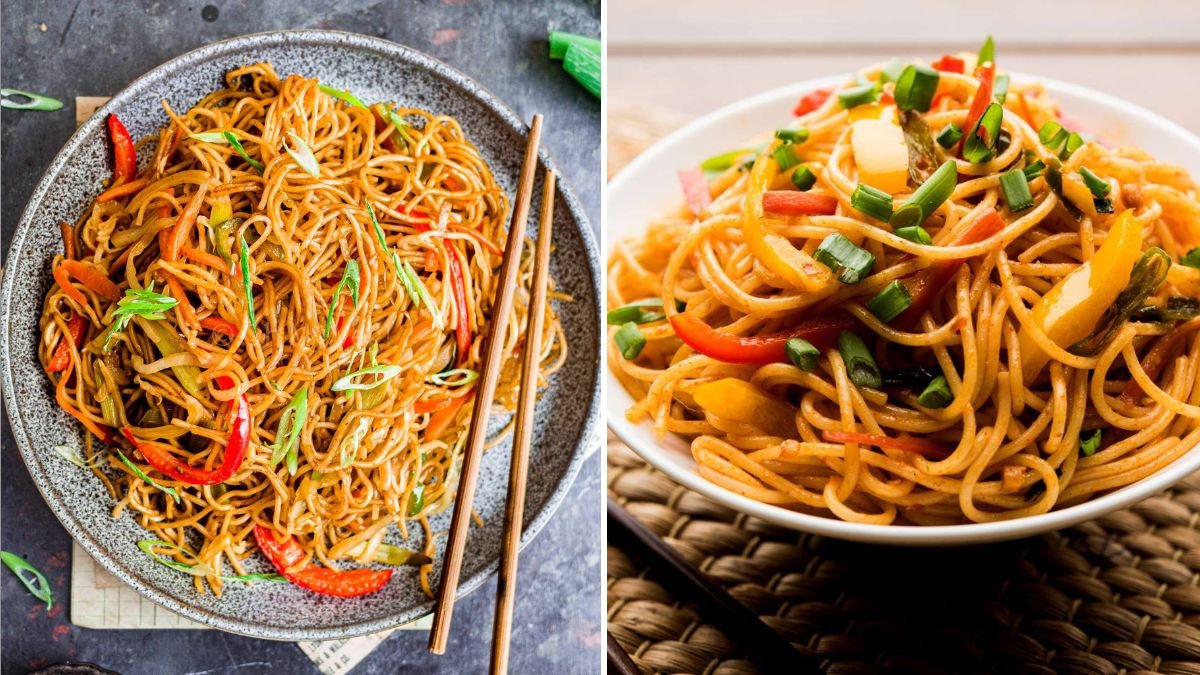
Vegetable Hakka Noodles are a popular Indo-Chinese dish loved for their flavorful sauce, colorful vegetables, and satisfying texture. Perfect as a quick lunch, dinner, or party snack, they combine the soft yet slightly chewy noodles with a medley of sautéed vegetables and a savory sauce that’s both tangy and aromatic. Making this dish at home allows you to control ingredients, spice levels, and portion size, ensuring a healthy, restaurant-style experience in your own kitchen.
This guide provides a 7-step process to prepare Vegetable Hakka Noodles at home, covering everything from ingredient selection to garnishing.
Step 1: Gather Fresh Ingredients
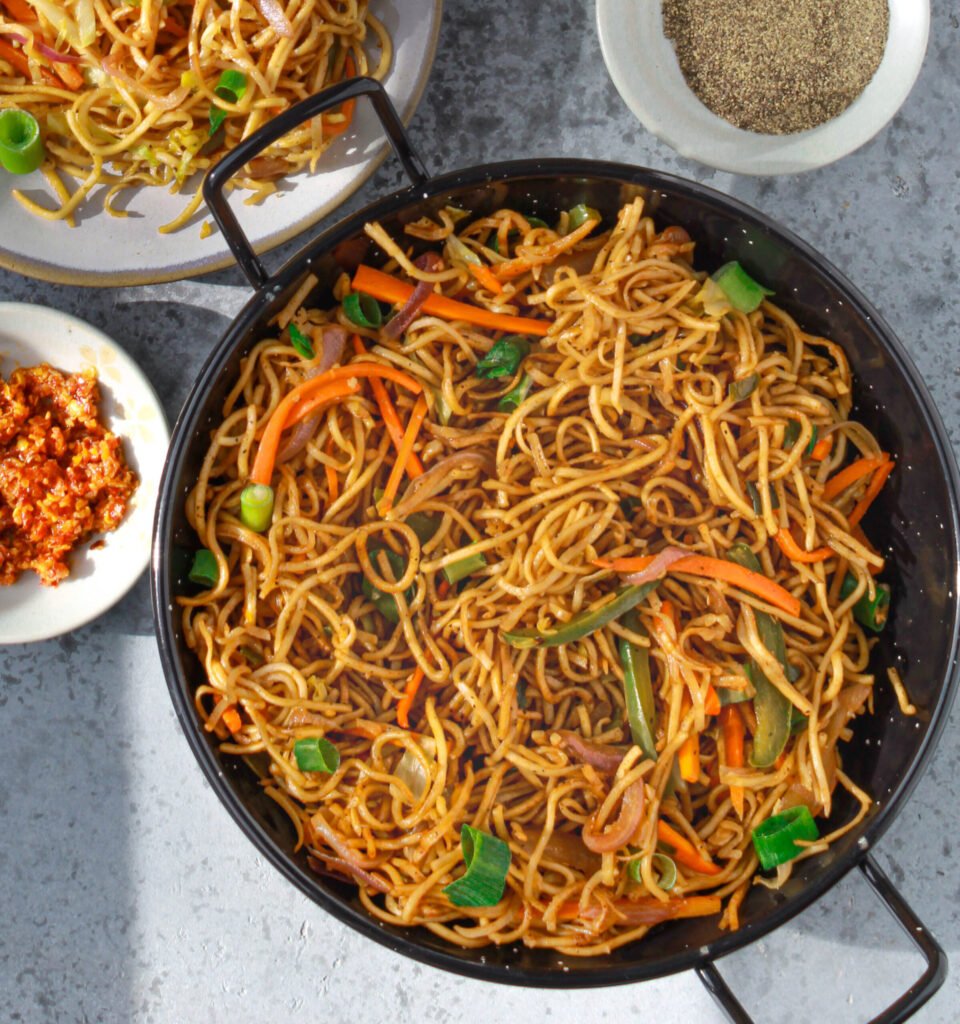
High-quality, fresh ingredients are the key to authentic-tasting Hakka noodles.
Ingredients:
- Hakka Noodles or Eggless Noodles: 200 grams
- Vegetables (julienned or thinly sliced):
- 1 medium carrot
- ½ cup cabbage
- ½ cup capsicum (bell pepper)
- ½ cup beans
- ¼ cup spring onions (green and white parts separated)
- Garlic: 2–3 cloves, finely chopped
- Ginger: 1-inch piece, finely chopped
- Soy Sauce: 2 tablespoons
- Oyster Sauce (optional): 1 tablespoon
- Vinegar: 1 teaspoon
- Sesame Oil: 1 teaspoon
- Black Pepper Powder: ½ teaspoon
- Red Chili Sauce (optional): 1 teaspoon
- Oil: 2 tablespoons
- Salt: To taste
Tip: Use fresh, crisp vegetables and good-quality noodles for the best texture and flavor.

Step 2: Boil the Noodles
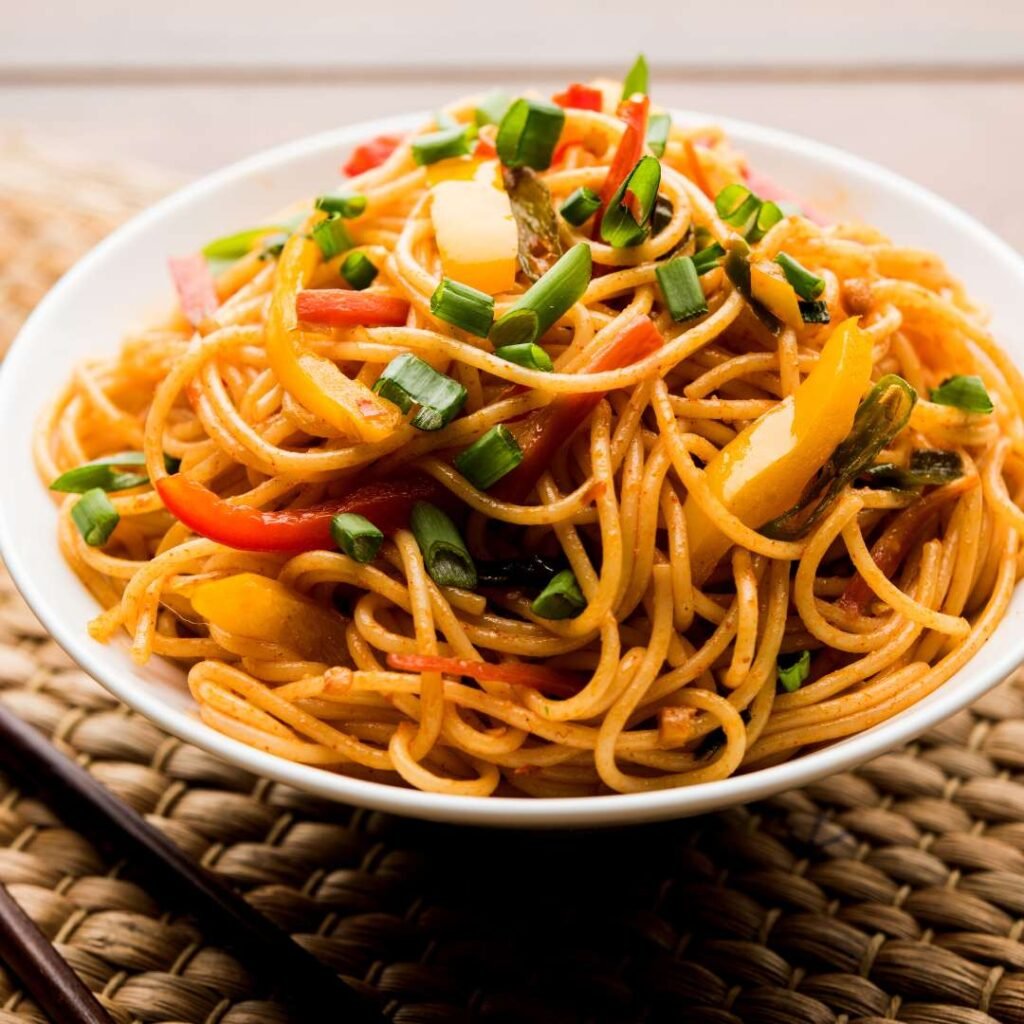
Cooking noodles perfectly ensures they don’t become mushy when stir-fried.
Instructions:
- Boil 4 cups of water in a large pot.
- Add a pinch of salt and 1 teaspoon oil to prevent sticking.
- Add noodles and cook according to package instructions until al dente (slightly firm).
- Drain immediately and rinse under cold running water to stop cooking.
- Toss lightly with ½ teaspoon oil to prevent sticking.
Tip: Do not overcook noodles; slightly firm noodles hold better when stir-fried with vegetables.
Step 3: Prepare Vegetables
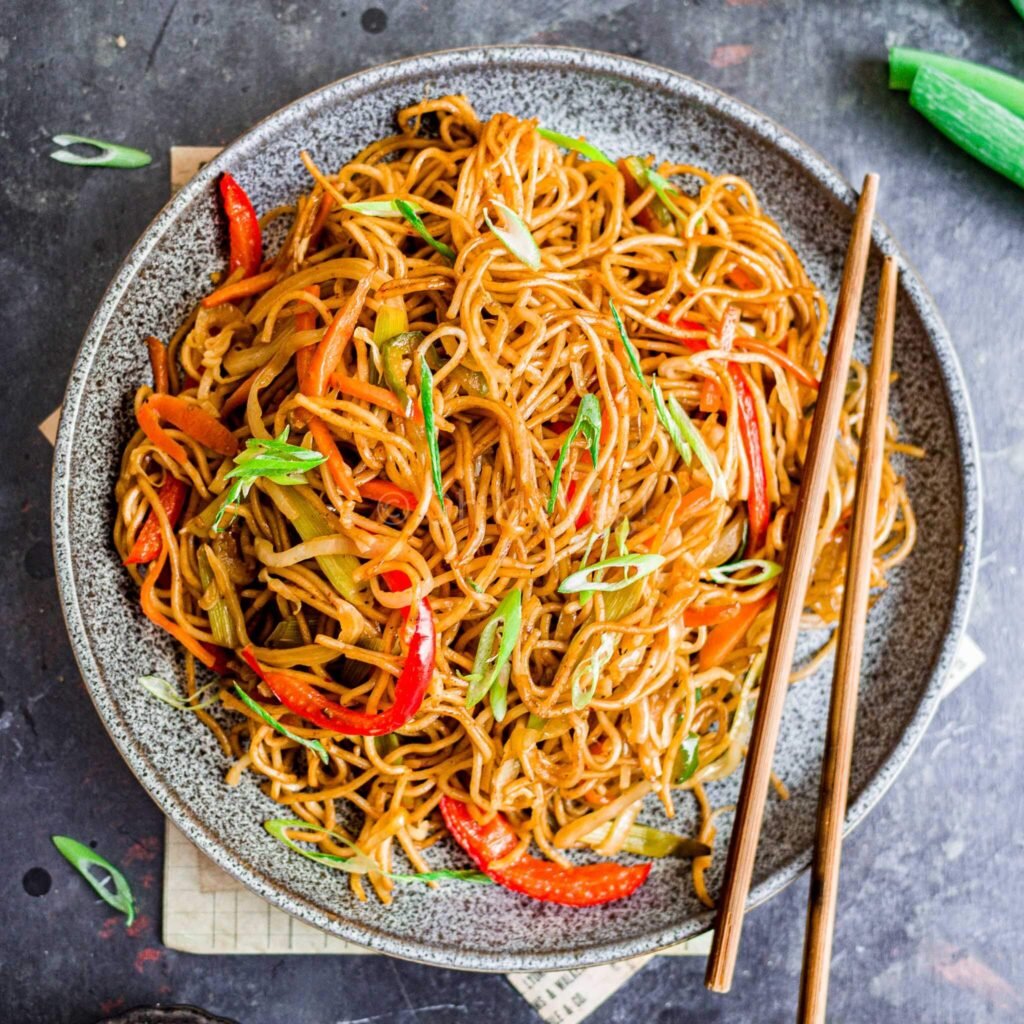
Properly cut vegetables ensure even cooking and maintain a crunch.
Instructions:
- Wash and peel vegetables where necessary.
- Cut carrots, capsicum, and beans into thin julienne strips.
- Slice cabbage finely.
- Separate spring onions into white and green parts; the whites will be sautéed, and the greens used for garnish.
Tip: Thinly sliced vegetables cook quickly and retain color and crunch, which is essential for Hakka noodles.

Step 4: Heat the Wok and Cook Aromatics
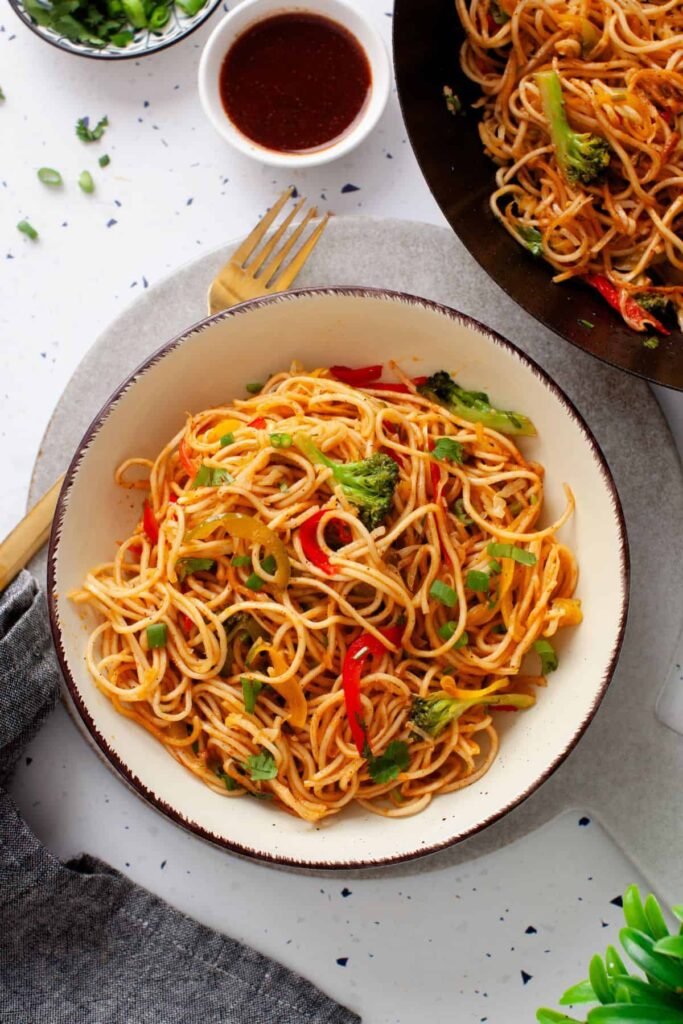
Aromatic ingredients form the base of flavorful Hakka noodles.
Instructions:
- Heat 2 tablespoons of oil in a wok or large pan over medium-high flame.
- Add chopped garlic and ginger; sauté for 30–40 seconds until fragrant.
- Add the white parts of the spring onions for a subtle, fresh onion flavor.
Tip: Avoid burning garlic; it can turn bitter and affect the taste of the noodles.
Step 5: Stir-Fry the Vegetables
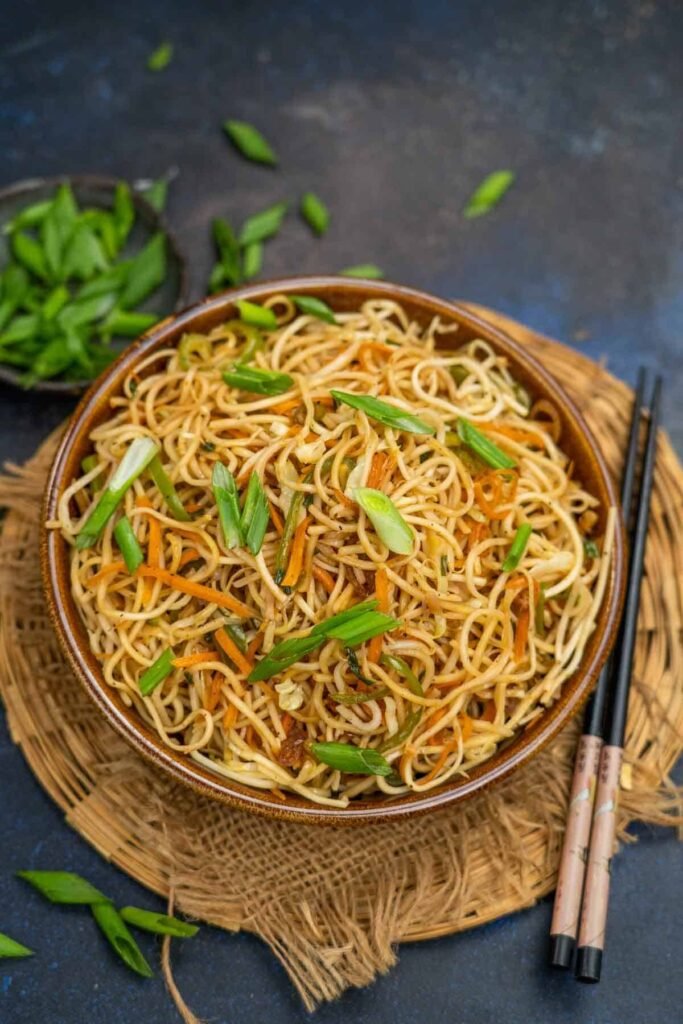
Proper stir-frying ensures vegetables are cooked yet retain crunch.
Instructions:
- Add harder vegetables like carrots, beans, and capsicum first.
- Stir-fry for 2–3 minutes until slightly tender but still crisp.
- Add cabbage and continue stir-frying for 1–2 minutes.
- Adjust salt and sprinkle a pinch of black pepper for seasoning.
Tip: Cook vegetables on high heat with continuous tossing to achieve a slight smoky flavor, typical of restaurant-style Hakka noodles.

Step 6: Add Noodles and Sauces
Integrating noodles with vegetables and sauces brings the dish together.
Instructions:
- Add boiled noodles to the wok with vegetables.
- Pour in soy sauce, oyster sauce, vinegar, and chili sauce (if using).
- Toss everything gently but thoroughly to ensure noodles are coated evenly with sauce.
- Stir-fry for 2–3 minutes on high heat, allowing flavors to meld.
- Drizzle sesame oil for added aroma and sheen.
Tip: Toss gently to avoid breaking noodles and maintain their long, attractive strands.
Step 7: Garnish and Serve
Finishing touches elevate both flavor and presentation.
Instructions:
- Turn off the heat and garnish with the green parts of spring onions.
- Optionally, sprinkle a few sesame seeds for added texture.
- Serve hot with:
- Chili Garlic Sauce or Szechuan Sauce for a spicier twist
- Soup or Manchurian for a complete Indo-Chinese meal
- Plate noodles attractively and enjoy immediately.
Tip: Vegetable Hakka noodles taste best fresh while they are hot, preserving their crunch and vibrant colors.

Extra Tips for Perfect Vegetable Hakka Noodles
- High Heat Cooking: Stir-fry on high heat for the signature smoky, “wok hei” flavor.
- Keep Vegetables Crisp: Don’t overcook; they should retain color and slight crunch.
- Sauce Balance: Adjust soy sauce, chili sauce, and vinegar according to taste preference.
- Oil Control: Use minimal oil to prevent noodles from becoming greasy.
- Fresh Noodles: Avoid stale or broken noodles; fresh noodles give the best texture.
Common Mistakes to Avoid
- Overcooking Noodles: Results in mushy texture.
- Burning Garlic or Ginger: Makes the dish bitter.
- Too Much Sauce: Can make noodles soggy.
- Uneven Cutting: Large vegetable pieces cook unevenly and affect texture.
- Not Rinsing Noodles: Causes sticking and clumping during stir-frying.
Tip: Follow proper steps for boiling, stir-frying, and tossing to ensure restaurant-style results.
Healthier Variations
- Use whole wheat or multigrain noodles for extra fiber.
- Add more colorful vegetables like broccoli, baby corn, or zucchini.
- Reduce oil or replace with olive or avocado oil for healthier cooking.
- Skip oyster sauce for a vegan version; use soy sauce and vinegar only.
Tip: Even with healthy swaps, maintaining high-heat stir-frying ensures authentic flavor and texture.
Serving Suggestions
- Serve as a main dish for lunch or dinner with chili sauce or Manchurian gravy.
- Pair with spring rolls or momos for a complete Indo-Chinese meal.
- Garnish with crispy fried onions or sesame seeds for added texture and presentation.
- Can also be served as a party snack in small bowls or plates.
Tip: Vegetable Hakka noodles are versatile and can complement many Indo-Chinese dishes for family meals or special occasions.
Final Thoughts
Cooking Vegetable Hakka Noodles at home is simple, quick, and allows for customization according to taste and nutrition. By following these 7 steps—gathering ingredients, boiling noodles, preparing vegetables, cooking aromatics, stir-frying vegetables, adding noodles and sauces, and garnishing—you can create flavorful, colorful, and restaurant-style noodles at home.

The dish combines healthy vegetables, protein-rich noodles, and aromatic sauces, making it a complete and satisfying meal. With practice, you can master tossing noodles perfectly, balancing flavors, and achieving that signature “wok hei” aroma, bringing the taste of Indo-Chinese restaurants straight to your kitchen.