
Aloo Gobi is a classic North Indian dish featuring tender potatoes (aloo) and cauliflower (gobi) cooked with aromatic spices to create a dry, flavorful curry. Popular for its simplicity, bold flavors, and nutritional value, Aloo Gobi has become a favorite in American kitchens seeking healthy, vegetarian, and gluten-free meals.
In this guide, you’ll learn how to prepare Aloo Gobi dry curry in five easy steps, bringing authentic Indian flavors to your table without complicated techniques or hard-to-find ingredients.
Why Aloo Gobi Dry Curry is Perfect for American Kitchens
- Quick and Easy: Ready in 25–30 minutes, ideal for weeknight dinners.
- Healthy and Low-Calorie: Made from fresh vegetables with minimal oil.
- Vegetarian and Gluten-Free: Naturally fits plant-based and gluten-free diets.
- Flavorful and Aromatic: The perfect blend of cumin, turmeric, ginger, and coriander.
- Versatile: Works as a main dish with rice, naan, or quinoa or as a side with other curries.
Aloo Gobi is both comforting and nutritious, making it ideal for busy Americans looking for wholesome homemade meals.
Step 1: Gather Your Ingredients
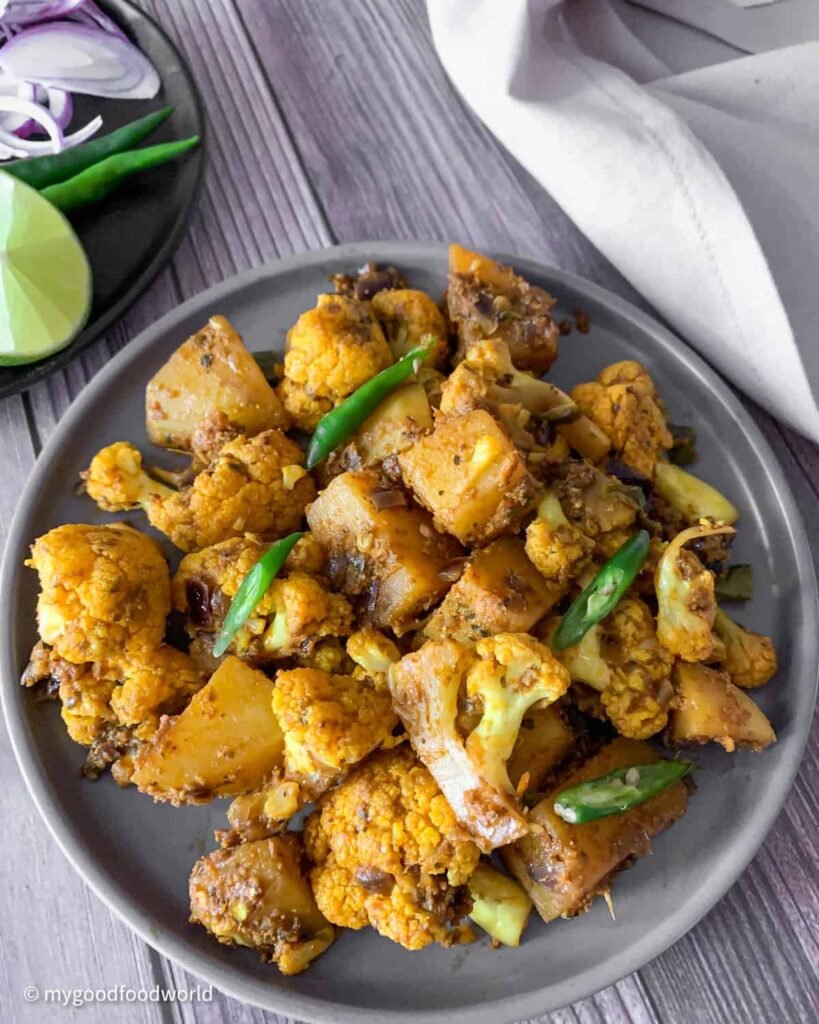
Authentic Aloo Gobi relies on fresh vegetables and aromatic spices. Most ingredients are readily available in American grocery stores.

Vegetables:
- 2 medium potatoes (aloo), peeled and diced
- 1 medium cauliflower head (gobi), cut into small florets
- 1 medium onion, chopped
- 2 medium tomatoes, chopped
- 1–2 green chilies, chopped (optional, adjust to taste)
- 2–3 garlic cloves, minced
- 1-inch piece ginger, grated
Spices and Seasonings:
- 1 teaspoon cumin seeds
- ½ teaspoon turmeric powder
- 1 teaspoon coriander powder
- ½ teaspoon garam masala
- ½ teaspoon red chili powder (optional)
- Salt to taste
- 2 tablespoons oil (vegetable, canola, or sunflower)
- Fresh cilantro, chopped for garnish
- Lemon wedges (optional, for tanginess)
Pro Tip: Use small, evenly sized florets and potato cubes for uniform cooking and better texture.
Step 2: Prepare the Vegetables

Preparation ensures even cooking and a visually appealing curry:

- Wash and dice potatoes into ½–1 inch cubes.
- Separate cauliflower into small, bite-sized florets.
- Chop onions, tomatoes, green chilies, garlic, and ginger.
- Keep all vegetables ready before cooking as stir-frying happens quickly.
Pro Tip: Soak cauliflower florets in lightly salted water for 5 minutes to remove any insects or dirt.
Step 3: Sauté the Aromatics and Spices
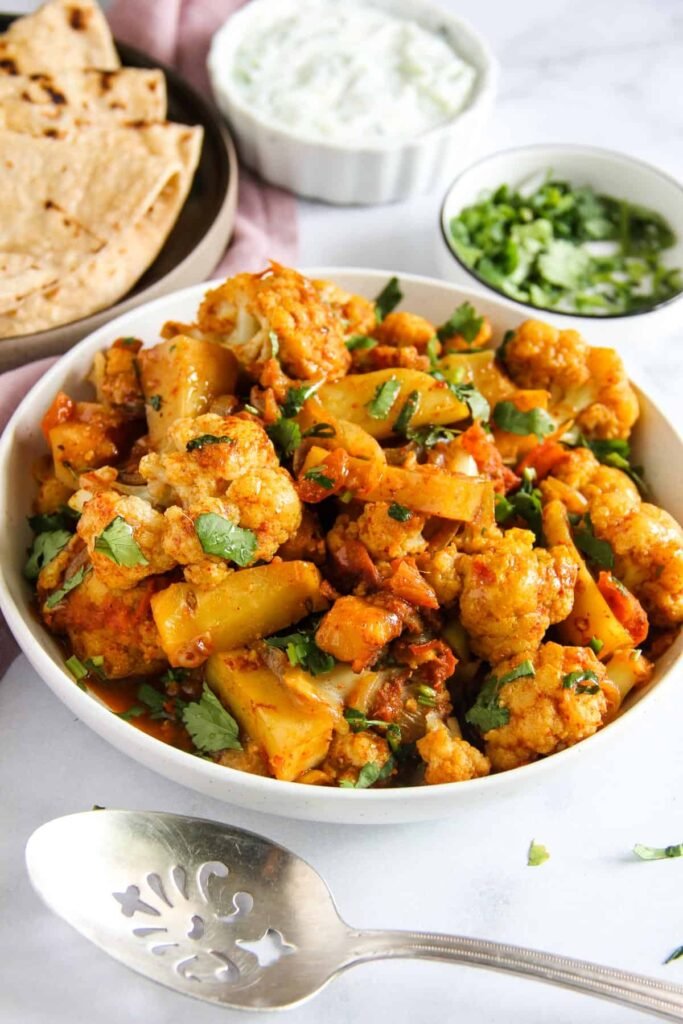
Tempering spices and sautéing aromatics build the signature flavor of Aloo Gobi:
- Heat 2 tablespoons oil in a large skillet or wok over medium heat.
- Add cumin seeds and let them sizzle for 30 seconds.
- Add minced garlic, ginger, and green chilies; sauté for 1 minute until fragrant.
- Add chopped onions and sauté until golden brown.
Pro Tip: Avoid high heat during sautéing, as it can burn the spices and garlic, creating a bitter flavor.
Step 4: Cook the Vegetables
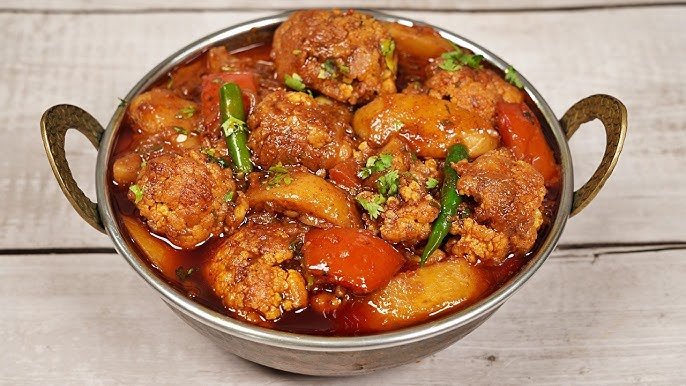
Cooking potatoes and cauliflower properly is key to perfect texture:

- Add diced potatoes and turmeric powder to the skillet; stir to coat evenly.
- Cover and cook for 5–7 minutes until potatoes start to soften.
- Add cauliflower florets, chopped tomatoes, coriander powder, red chili powder, and salt.
- Mix gently, cover, and cook for another 8–10 minutes on medium-low heat. Stir occasionally to prevent sticking.
- Sprinkle garam masala at the end and mix gently to coat vegetables.
Pro Tip: Avoid overcooking to retain a slight crunch in the cauliflower and prevent potatoes from becoming mushy.
Step 5: Garnish and Serve
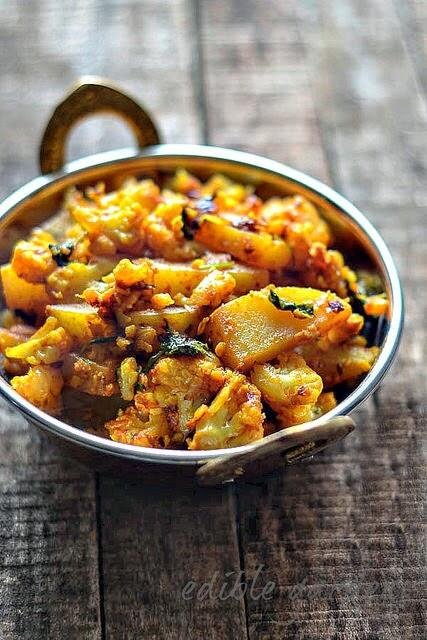
Garnishing enhances flavor, aroma, and presentation:
- Remove from heat and sprinkle freshly chopped cilantro over the curry.
- Serve hot with steamed rice, roti, naan, or quinoa.
- Optional: Serve with lemon wedges for a tangy lift that balances the spices.
Pro Tip: For a modern American twist, serve Aloo Gobi in a grain bowl with brown rice, quinoa, and a side of yogurt for a wholesome, balanced meal.
Tips for Making the Best Aloo Gobi Dry Curry
- Uniform Vegetable Sizes: Ensures even cooking and consistent texture.
- Low to Medium Heat: Helps cook vegetables without burning spices.
- Avoid Overcooking: Keeps cauliflower slightly crunchy and potatoes tender.
- Flavor Adjustments: Add more green chilies or red chili powder for heat, or a pinch of sugar to balance acidity from tomatoes.
- Optional Protein Boost: Add chickpeas or tofu cubes for added protein in American-style meal prep bowls.
Health Benefits of Aloo Gobi
- High in Fiber and Vitamins: Cauliflower provides vitamin C, folate, and fiber; potatoes provide potassium and vitamin B6.
- Low-Calorie and Filling: Minimal oil and nutrient-dense vegetables keep you full without excess calories.
- Heart-Healthy: Use heart-healthy oils like canola or sunflower and moderate spices for flavor.
- Gluten-Free: Perfect for gluten-sensitive diets.
- Vegetarian-Friendly: Naturally plant-based, fitting into vegan and vegetarian diets.
Aloo Gobi is not just flavorful—it’s a nutritious and satisfying dish suitable for modern American kitchens focusing on health and convenience.

Why Americans Love Aloo Gobi
- Quick Weeknight Meal: Ready in under 30 minutes for busy schedules.
- Vegetarian-Friendly: Appeals to plant-based and flexitarian diets.
- Kid-Friendly: Mild spices make it appealing to children and adults alike.
- Versatile: Pairs well with rice, bread, or even as a filling for wraps and sandwiches.
- Comfort Food: Warm, aromatic, and hearty, perfect for cozy family dinners.
This simple yet flavorful dish brings authentic North Indian flavors to American homes in an approachable, healthy format.
Final Thoughts
Cooking Aloo Gobi dry curry at home is easy, rewarding, and a great way to introduce authentic Indian flavors into American kitchens. By following these five simple steps—gathering ingredients, preparing vegetables, sautéing aromatics and spices, cooking vegetables, and garnishing—you can create a restaurant-quality dish in your own kitchen.
Whether for a weeknight dinner, lunchbox meal, or family gathering, this dish is light, healthy, and packed with flavor. Pair with steamed rice, roti, or quinoa, and enjoy a classic North Indian dish that’s both comforting and nutritious.