
Vegetable Korma is a rich, creamy, and aromatic Indian curry that’s perfect for special occasions, weeknight dinners, or festive meals. Traditionally, korma includes onions, but a no-onion version is ideal for those with dietary restrictions, religious observances, or simply a lighter taste preference. Even without onions, this version maintains a luxurious, creamy texture and a balanced medley of spices that will impress family and friends.
This 7-step guide walks you through making restaurant-style Vegetable Korma without onion, ensuring the dish is flavorful, aromatic, and visually appealing.
Step 1: Gather Fresh Ingredients

Using fresh vegetables, aromatic spices, and quality dairy or coconut milk ensures a rich, satisfying korma.
Vegetables:

- 1 cup carrots, diced
- 1 cup beans, chopped
- 1 cup peas
- 1 cup cauliflower florets
- 1 cup potatoes, diced
- Optional: ½ cup paneer cubes for added richness
Spices and Flavorings:
- 1 tsp cumin seeds
- 1 tsp coriander powder
- ½ tsp turmeric powder
- ½ tsp red chili powder
- ½ tsp garam masala
- 2–3 green cardamom pods
- 1 cinnamon stick
- 2–3 cloves
- Salt to taste
Other Ingredients:
- 2–3 tbsp oil or ghee
- 1 cup coconut milk or fresh cream
- 1 tsp ginger-garlic paste
- 10–12 cashews, soaked in water
- 1 tsp poppy seeds (optional for extra creaminess)
- Fresh coriander leaves for garnish
Pro Tip: Using fresh vegetables and quality coconut milk ensures a naturally creamy and flavorful korma without onions.
Step 2: Prepare the Cashew-Poppy Seed Paste
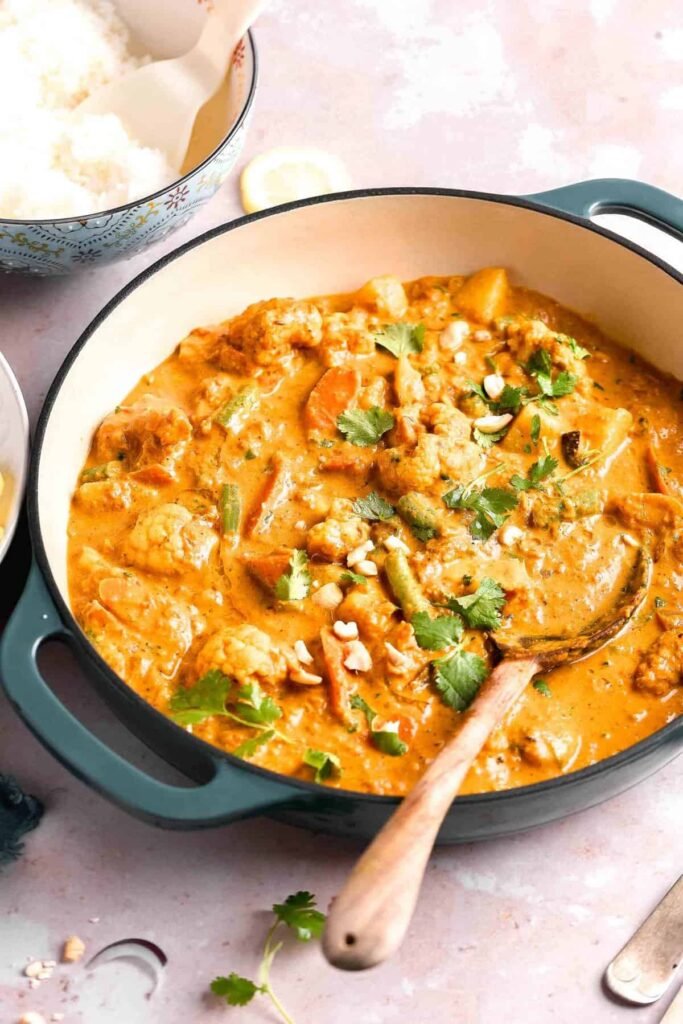
This paste is the base for creamy, flavorful korma:

- Soak cashews and poppy seeds (if using) in warm water for 15–20 minutes.
- Blend them into a smooth paste using 2–3 tbsp water.
- Set aside for later use in the curry.
Pro Tip: Cashew paste adds richness and a silky texture, making up for the absence of onions.
Step 3: Sauté Whole Spices and Aromatics
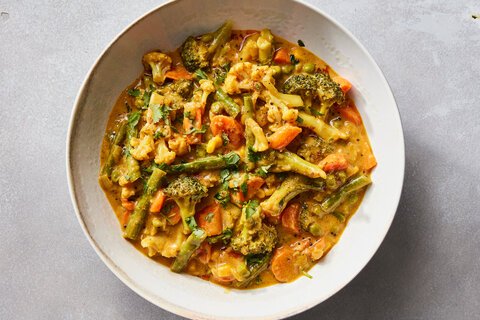
Sautéing spices in oil releases their fragrance and depth of flavor:
- Heat 2–3 tbsp of oil or ghee in a pan.
- Add cumin seeds, cardamom, cloves, and cinnamon stick. Sauté for 30 seconds until aromatic.
- Add ginger-garlic paste and sauté for another minute.
Pro Tip: Cooking spices gently enhances their flavor without making them bitter.
Step 4: Cook the Vegetables
The vegetables form the heart of your korma:

- Add diced carrots, beans, cauliflower, peas, and potatoes to the pan.
- Stir to coat the vegetables with the spices.
- Add ½ cup water, cover, and simmer for 8–10 minutes, or until the vegetables are tender but not mushy.
Pro Tip: Keep vegetables slightly firm; they will finish cooking once the coconut milk or cream is added.
Step 5: Add Cashew Paste and Coconut Milk

This step creates the luxurious, creamy texture of the korma:
- Stir in the prepared cashew-poppy seed paste.
- Add coconut milk or fresh cream slowly while stirring gently.
- Mix thoroughly to ensure a smooth, even consistency.
- Simmer on low heat for 5–7 minutes.
Pro Tip: Avoid boiling the coconut milk or cream vigorously, as it can curdle and affect the creaminess of the korma.
Step 6: Season and Finish
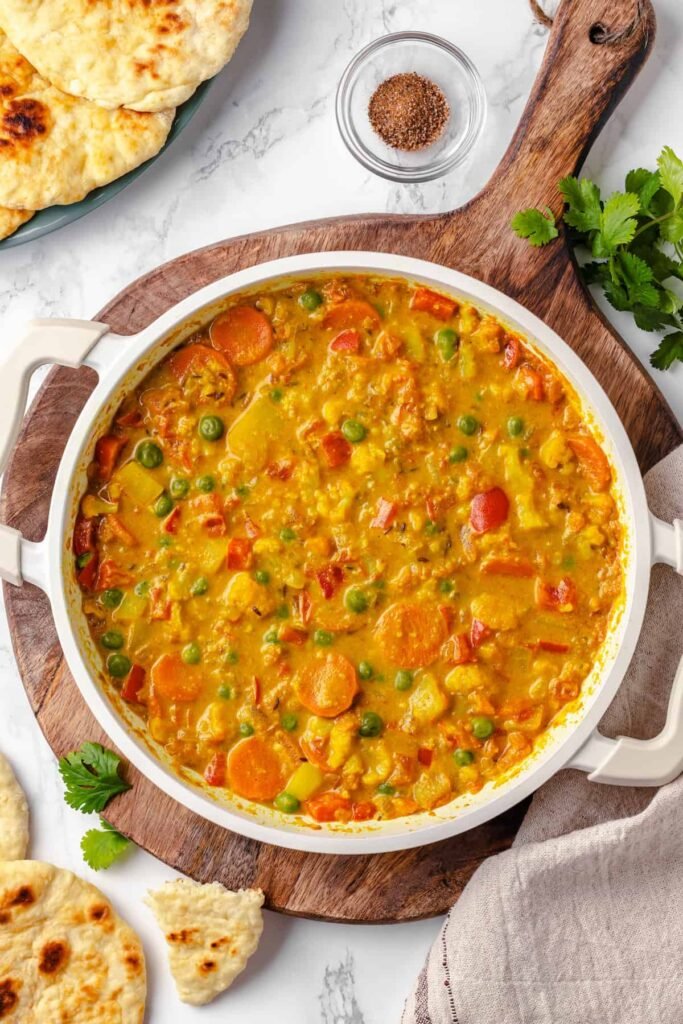
Proper seasoning brings out the full flavors of the curry:

- Add turmeric, red chili powder, coriander powder, and garam masala.
- Adjust salt to taste.
- Optional: Add a small pinch of sugar to balance flavors.
- Sprinkle freshly chopped coriander leaves on top.
Pro Tip: Add garam masala at the end of cooking to retain its aroma and flavor.
Step 7: Serve Hot with Your Favorite Accompaniments
Vegetable Korma is versatile and pairs beautifully with:
- Indian Breads: Naan, roti, or paratha for scooping up creamy gravy.
- Rice: Steamed basmati rice, jeera rice, or even pulao.
- Side Dishes: Raita or salad for a refreshing contrast.
Pro Tip: Serve immediately for maximum aroma and flavor, as korma tastes best fresh and creamy.
Tips for Perfect Onion-Free Vegetable Korma
- Use Fresh Cashews and Coconut Milk: For natural creaminess without adding onions.
- Gentle Simmering: Prevents coconut milk or cream from separating and maintains a silky gravy.
- Balanced Spice Levels: Adjust chili and garam masala according to your taste.
- Uniform Vegetable Cuts: Ensures even cooking and better presentation.
- Optional Paneer: Adds protein and richness, making the dish more filling.
Why Vegetable Korma Without Onion is a Crowd Favorite
- Creamy and Luxurious: Cashew paste and coconut milk create a rich texture.
- Light Yet Flavorful: No onions make it easier to digest and suitable for fasting or dietary restrictions.
- Vegetarian and Healthy: Packed with fresh vegetables and aromatic spices.
- Versatile: Perfect for family dinners, parties, or festive occasions.
- Customizable: Add paneer, tofu, or extra nuts for variation.
This dish is perfect for anyone looking for a comforting, aromatic, and flavorful vegetarian curry without using onions.

Serving Suggestions
- Pair with naan or paratha for a traditional North Indian meal.
- Serve with steamed rice or jeera rice for a lighter option.
- Garnish with fried cashews or raisins for added texture and festive appeal.
- Pair with raita or pickle for a balanced meal.
Health Benefits of Vegetable Korma Without Onion
- Nutrient-Rich: Fresh vegetables provide fiber, vitamins, and minerals.
- Protein: Paneer adds vegetarian protein for a balanced diet.
- Healthy Fats: Cashews and coconut milk offer healthy fats.
- Digestive Friendly: Onion-free preparation is gentle on the stomach.
- Antioxidant-Rich Spices: Turmeric, coriander, and cumin support overall wellness.
Final Thoughts: Master Onion-Free Vegetable Korma in 7 Steps
This 7-step guide makes it easy to prepare restaurant-quality Vegetable Korma without onions at home. From preparing cashew paste to simmering tender vegetables in creamy coconut milk, every step ensures a rich, flavorful, and visually appealing curry.
Whether it’s a weeknight dinner, family feast, or festive meal, this korma will impress with its taste, aroma, and creaminess. Pair it with naan, roti, or rice, and you have a wholesome, satisfying, and elegant vegetarian meal ready to serve.