
If you’re looking for a delicious, aromatic, and wholesome meal, vegetable kurma is a perfect choice. This creamy Indian curry pairs beautifully with soft chapati or roti, making it ideal for lunch, dinner, or even a festive meal. With this 5-step guide, you can make restaurant-style vegetable kurma at home that’s rich in flavor, healthy, and satisfying.
Why Vegetable Kurma is a Must-Try
Vegetable kurma is a classic Indian curry loved for its creamy texture, aromatic spices, and versatility. Here’s why it’s gaining popularity in American kitchens:
- Creamy and Flavorful: Made with coconut, cashews, or yogurt for a smooth texture.
- Vegetable-Packed: Loaded with carrots, beans, peas, and bell peppers for a nutritious boost.
- Quick and Easy: Ready in under 30 minutes, perfect for busy weeknights.
- Kid-Friendly: Mild, rich flavors make it appealing to all ages.
- Perfect for Chapati or Rice: A versatile dish that pairs well with flatbreads or steamed rice.
This makes vegetable kurma a go-to option for anyone seeking a healthy, flavorful, and comforting meal.
Ingredients You’ll Need
Here’s a list of ingredients that are easy to find in American kitchens:

Vegetables:
- 1 cup carrots, diced
- 1 cup green beans, chopped
- 1/2 cup peas (fresh or frozen)
- 1 bell pepper, diced
- 1 small potato, diced
- 1 small onion, finely chopped
For the Kurma Paste:
- 1/4 cup grated coconut (fresh or desiccated)
- 10-12 cashews or almonds
- 2 green chilies
- 1 teaspoon ginger, grated
- 1 teaspoon garlic, minced
Spices & Seasonings:
- 1 teaspoon cumin seeds
- 1/2 teaspoon turmeric powder
- 1 teaspoon coriander powder
- 1 teaspoon garam masala
- Salt to taste
- 2 tablespoons oil or ghee
Optional Garnish:

- Fresh cilantro, chopped
- A few roasted cashews for extra crunch
Step 1: Prepare the Kurma Paste
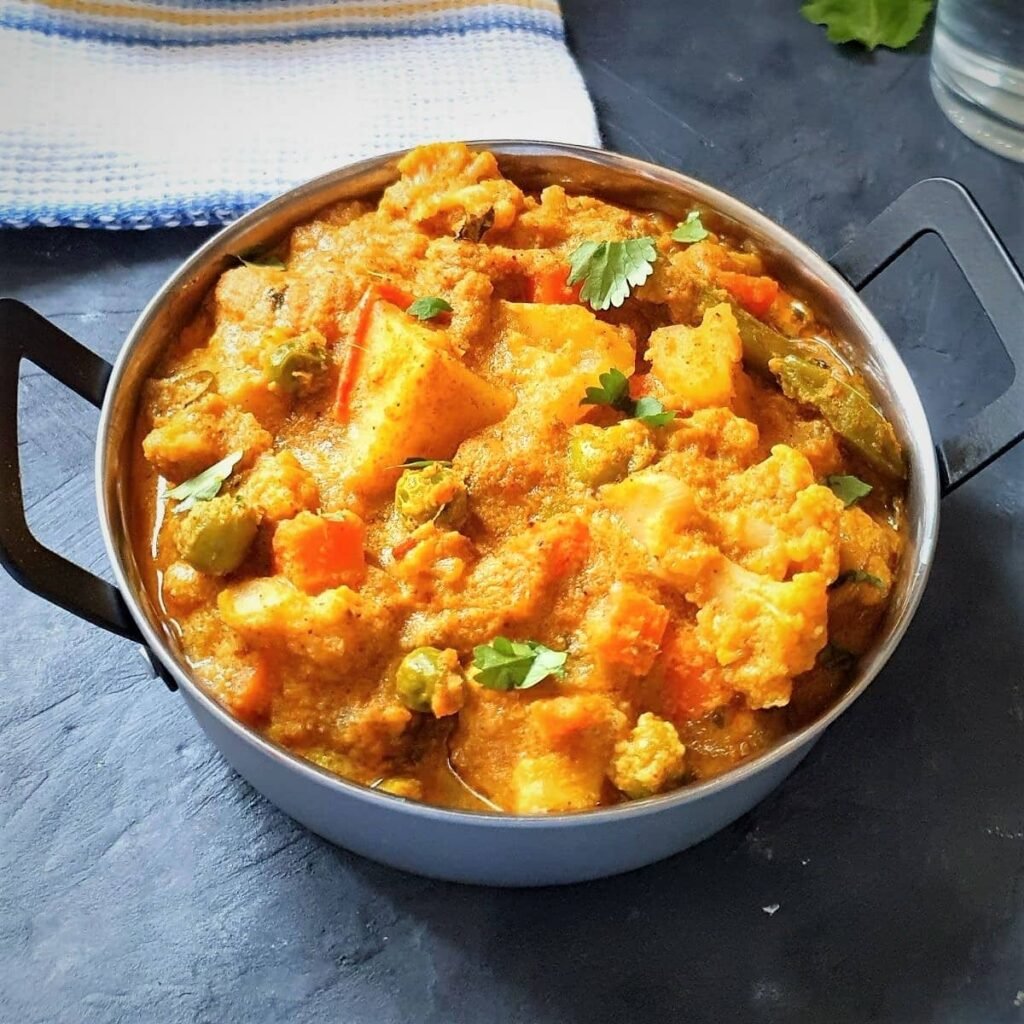
The creaminess and flavor of kurma come from the blended paste.
- In a blender, combine grated coconut, cashews, green chilies, ginger, and garlic.
- Add 1/4 cup water and blend until smooth to form a fine paste.
Pro Tip: Soak cashews in warm water for 10 minutes before blending to make the paste smoother and creamier.
Step 2: Sauté the Aromatics and Vegetables
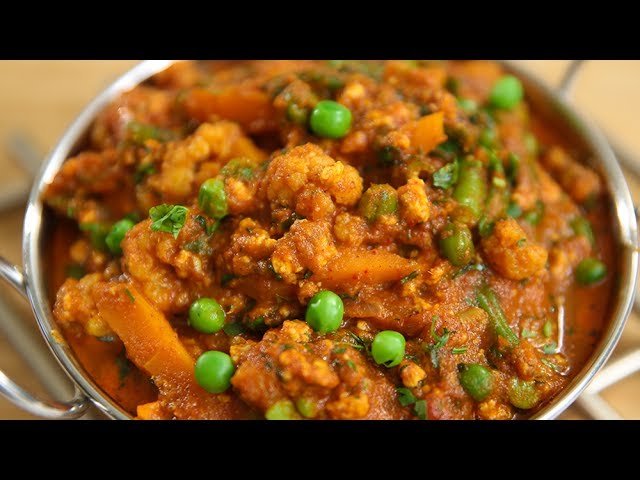
Heat 2 tablespoons of oil or ghee in a pan over medium heat.
- Add cumin seeds and let them sizzle for 30 seconds.
- Add chopped onions and sauté until they turn translucent and fragrant.
- Add diced potatoes, carrots, and beans. Stir-fry for 3-4 minutes.
This step ensures that the vegetables are slightly tender and infused with aromatic flavors, forming the base for your kurma.

Pro Tip: Use medium heat to prevent burning and maintain the vegetables’ texture.
Step 3: Add the Kurma Paste and Spices
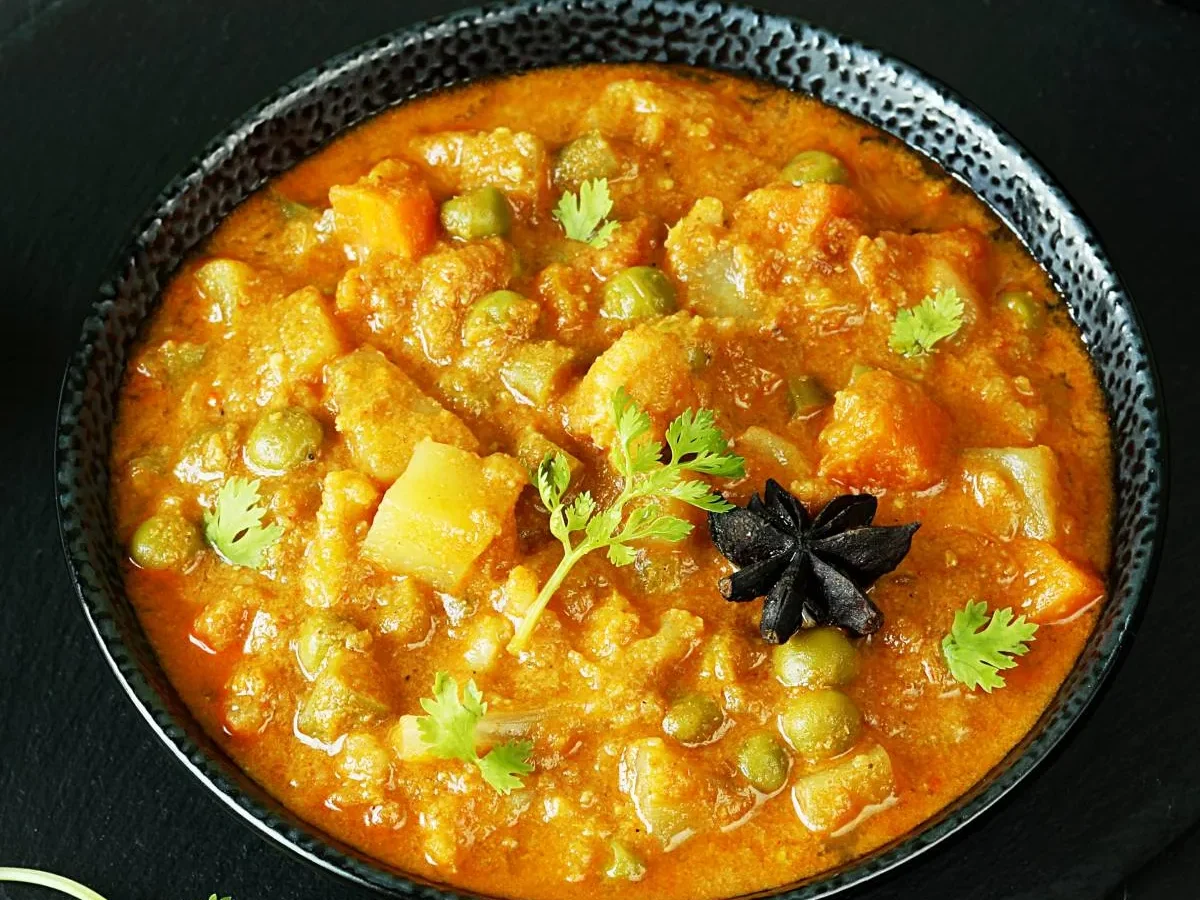
Add the prepared coconut-cashew paste to the pan with the sautéed vegetables. Stir gently to coat the vegetables.
- Add turmeric, coriander powder, and salt.
- Pour in 1/2 to 3/4 cup water, depending on your preferred consistency.
- Simmer for 8-10 minutes until the vegetables are cooked through and the sauce thickens slightly.
Pro Tip: Stir occasionally and cover the pan to allow the flavors to meld together beautifully.
Step 4: Finish with Garam Masala and Garnish
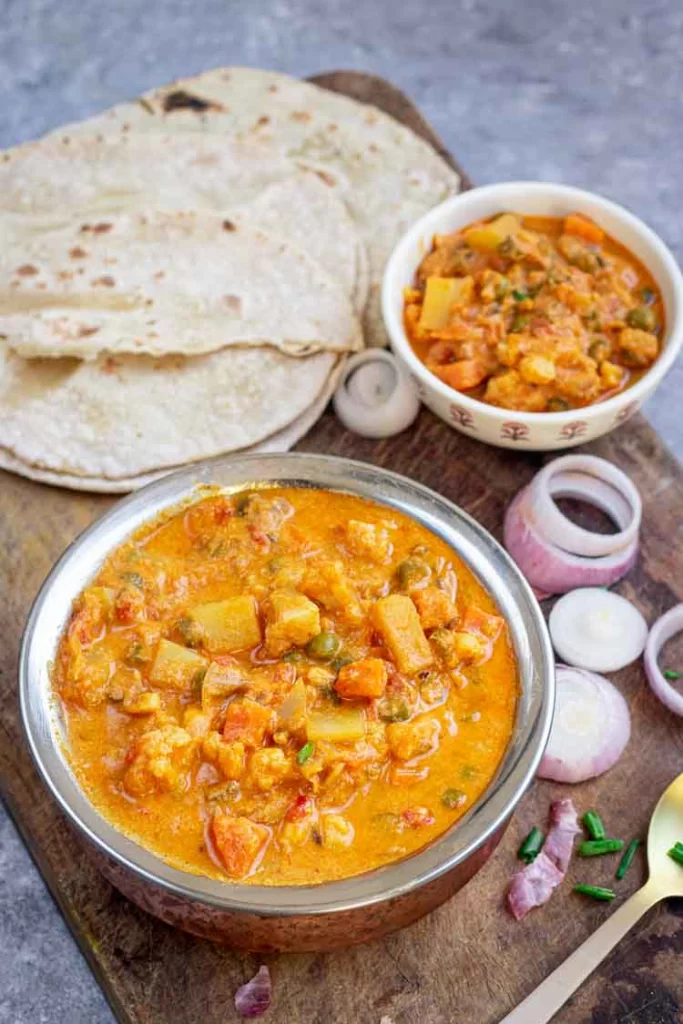
Once the vegetables are tender and the curry is creamy:

- Add 1 teaspoon garam masala and mix well.
- Taste and adjust salt or spices if needed.
- Garnish with fresh cilantro and roasted cashews for added flavor and crunch.
This step enhances the aroma and gives the kurma a restaurant-style finish.
Step 5: Serve with Chapati
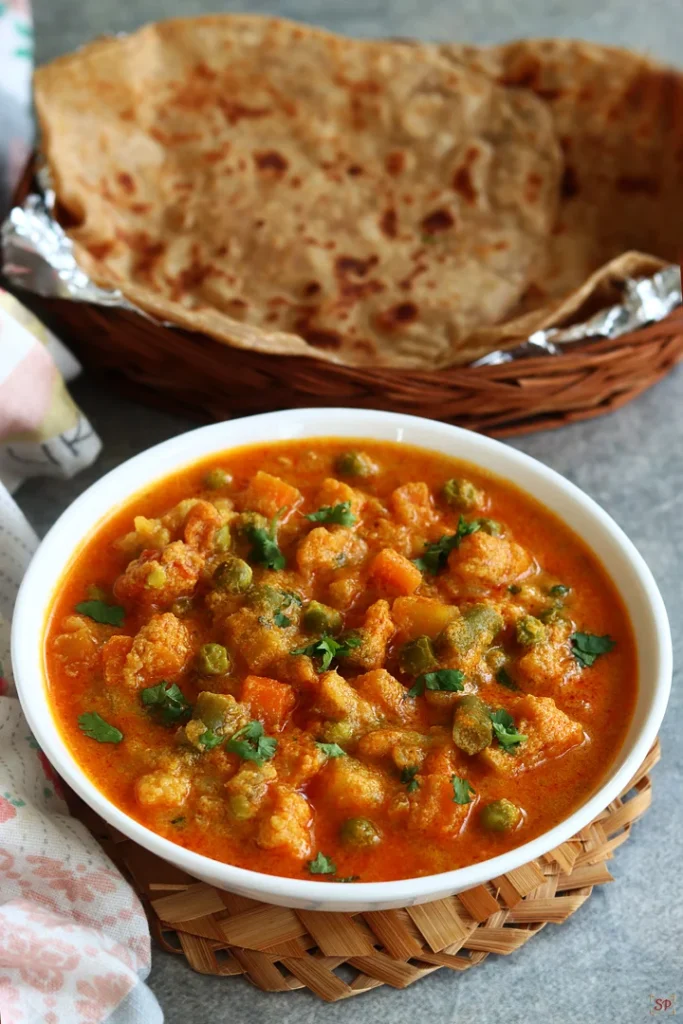
Vegetable kurma pairs perfectly with soft chapati, roti, or naan. Serve hot, along with a side of yogurt or raita for a wholesome meal.
- For an American twist, you can also serve it with steamed rice, quinoa, or whole wheat flatbreads.
- Add a wedge of lemon for extra freshness.
Pro Tip: Warm your chapati slightly before serving to enhance the flavors and make the meal more comforting.
Tips for Perfect Vegetable Kurma
- Use Fresh Ingredients: Fresh vegetables and coconut enhance flavor and nutrition.
- Blend Smooth Paste: A smooth coconut-cashew paste makes the curry creamy and rich.
- Adjust Consistency: Add more water for a thinner curry or less for a thicker, restaurant-style kurma.
- Cook Vegetables Evenly: Dice vegetables uniformly to ensure they cook at the same rate.
- Garnish Wisely: Fresh cilantro, roasted cashews, or a drizzle of ghee adds a finishing touch.
Health Benefits of Vegetable Kurma
- Rich in Vitamins and Minerals: Carrots, beans, peas, and spinach (optional) provide essential nutrients.
- Good Fats from Nuts and Coconut: Cashews and coconut provide healthy fats for energy.
- High in Fiber: Vegetables aid digestion and keep you full.
- Protein Boost: Cashews add protein, making this a balanced vegetarian dish.
- Low-Calorie Option: Serve with chapati or brown rice for a light yet filling meal.
This makes vegetable kurma a healthy, flavorful, and family-friendly option for anyone looking to add wholesome meals to their diet.

Serving Ideas
- Weeknight Dinner: Quick, comforting, and easy to make in 30 minutes.
- Lunch Option: Pair with chapati or whole wheat flatbreads for a filling meal.
- Party Meal: Serve in small bowls with naan or rice for festive occasions.
- Meal Prep: Store in the fridge for 2-3 days and reheat for convenient meals.
Vegetable kurma’s creamy texture, mild spices, and versatile serving options make it an excellent choice for both American and Indian-inspired meals.
Conclusion
Vegetable kurma is a simple, aromatic, and creamy curry that’s perfect for pairing with chapati, roti, or rice. By following this 5-step guide, you can make a nutritious, restaurant-style dish at home with minimal effort. From preparing the rich coconut-cashew paste to sautéing vegetables and finishing with aromatic spices, every step ensures flavorful results.
Whether you’re planning a weeknight dinner, a wholesome lunch, or a festive meal, vegetable kurma is a versatile, delicious, and nutritious option that fits perfectly in an American kitchen. Gather your fresh vegetables, spices, and nuts, and enjoy a creamy, flavorful meal that everyone will love.