
There’s something truly magical about biryani — the aroma of saffron and spices, the steam rising from perfectly layered rice, and the burst of flavor in every spoonful. Originating from the royal Mughal kitchens, biryani has evolved across regions and cultures, finding a special place in kitchens around the world.
The Veg Biryani with Cashews is a lighter, vegetarian twist on the classic recipe — yet it retains the same royal essence. This version combines fluffy basmati rice, tender vegetables, rich spices, and crunchy roasted cashews that add a nutty, buttery flavor to every bite. Whether you’re hosting a festive dinner, celebrating a family gathering, or craving comfort food after a long day, this biryani is your go-to recipe.
In this guide, we’ll walk you through 6 easy steps to cook the perfect Veg Biryani with Cashews — simple, aromatic, and restaurant-quality right from your kitchen!
Step 1: Gather Your Star Ingredients

Before you begin, let’s bring together everything you need for this rich and colorful dish.
Ingredients:
For the rice:

- 1 ½ cups basmati rice (aged, long-grain preferred)
- 3–4 cups water
- 1 bay leaf
- 3–4 cloves
- 1 cinnamon stick
- 2–3 green cardamoms
- Salt to taste
For the vegetables:
- 1 cup cauliflower florets
- 1 carrot, diced
- ½ cup green peas
- ½ cup green beans, chopped
- 1 bell pepper, sliced
- 1 large onion, thinly sliced
For the masala:
- 2 tablespoons ghee or oil
- 1 teaspoon cumin seeds
- 1 tablespoon ginger-garlic paste
- 2 medium tomatoes, chopped
- ½ cup plain yogurt
- 1 teaspoon turmeric powder
- 1 teaspoon red chili powder
- 1 tablespoon biryani masala or garam masala
- Salt to taste
For garnish and layering:
- 15–20 cashews, roasted in ghee
- A few strands of saffron soaked in 2 tablespoons warm milk
- Fresh cilantro and mint leaves, chopped
- Fried onions (optional but recommended)
Step 2: Cook the Rice to Perfection
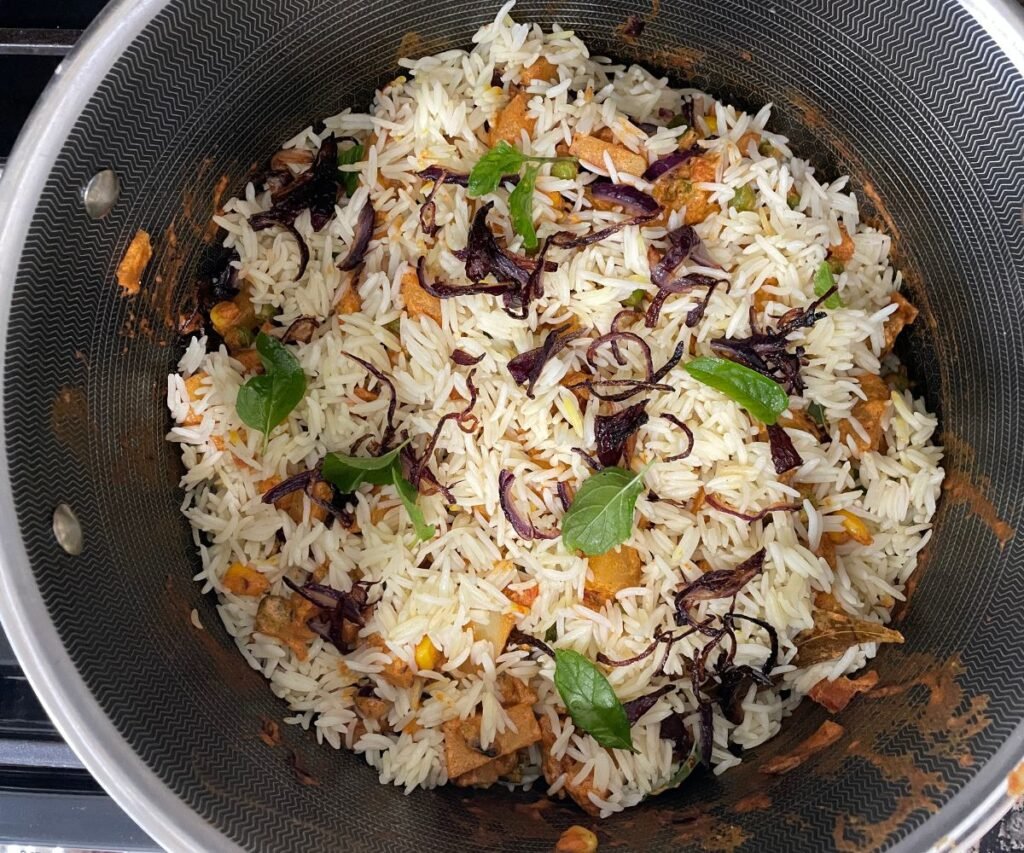
The key to great biryani lies in the rice — fluffy, fragrant, and separate grains that don’t stick together.
- Rinse the basmati rice under cold water until the water runs clear. This removes excess starch and prevents clumping.
- Soak the rice in water for 20–30 minutes, then drain.
- Boil 3–4 cups of water in a large pot. Add the bay leaf, cloves, cardamom, cinnamon, and salt.
- Add the soaked rice and cook until it’s 70–80% done. The grains should be tender but slightly firm in the center.
- Drain the rice immediately and spread it on a tray to cool.
This step ensures your rice won’t turn mushy when layered later.

Step 3: Sauté and Spice the Vegetables

Now comes the heart of the biryani — the vegetable masala.
- Heat ghee or oil in a wide pan. Add cumin seeds and let them splutter.
- Add sliced onions and sauté until golden brown.
- Stir in the ginger-garlic paste and sauté until the raw smell disappears.
- Add tomatoes and cook until soft and mushy.
- Add turmeric, red chili powder, and biryani masala. Mix well.
- Add the chopped vegetables — carrots, beans, peas, cauliflower, and bell peppers. Stir-fry on medium heat for 5–6 minutes.
- Add yogurt, salt, and a splash of water. Cover and cook until the vegetables are tender but not overcooked.
Once done, your kitchen will be filled with irresistible aromas — a sure sign you’re on the right track!
Step 4: Layer and Infuse the Flavors

Layering is what sets biryani apart from a regular rice dish. It allows the spices, saffron, and herbs to mingle beautifully.
- In a heavy-bottomed pot, spread a thin layer of the vegetable masala.
- Add a layer of rice on top.
- Sprinkle some saffron milk, chopped mint, cilantro, fried onions, and roasted cashews.
- Repeat the layers until all the rice and masala are used.
- Finish with a topping of saffron milk and a handful of cashews.
The layering ensures that every spoonful of biryani delivers a balance of textures and flavors — from soft rice and tender veggies to the nutty crunch of cashews.
Step 5: Dum Cook for That Perfect Aroma

The traditional “dum” technique seals in moisture and flavor, giving biryani its signature aroma.

Here’s how to do it at home:
- Cover the pot tightly with a lid. You can seal the edges with dough or simply place a heavy pan on top to trap the steam.
- Cook on very low heat for 10–12 minutes.
- Turn off the heat and let it rest for another 10 minutes before opening the lid.
When you finally lift the lid, you’ll be greeted by the heavenly fragrance of saffron, ghee, and spices. Use a fork to gently fluff the rice — don’t stir too hard, or the grains will break.
Step 6: Garnish and Serve Like a Pro
Now that your Veg Biryani with Cashews is ready, it’s time to plate and serve it beautifully.
For the finishing touch:
- Garnish with extra roasted cashews, mint leaves, and fried onions.
- Serve with a side of raita (yogurt mixed with cucumber, mint, and a sprinkle of cumin powder).
- You can also add lemon wedges and pickled onions for a tangy kick.
This dish pairs perfectly with a chilled mango lassi, a crisp cucumber salad, or even a spicy tomato chutney.

Tips for Perfect Veg Biryani Every Time
- Use long-grain basmati rice for the best texture and aroma.
- Don’t overcook the veggies — they should retain some bite.
- Soak saffron in warm milk for at least 10 minutes to release its color and fragrance.
- Ghee makes a difference — it adds richness and authentic flavor.
- Rest before serving — it helps the flavors deepen and the rice firm up.
Nutritional Benefits of Veg Biryani with Cashews
Aside from its irresistible flavor, this dish packs plenty of nutrients:
- Cashews add healthy fats, magnesium, and protein.
- Vegetables provide fiber, vitamins, and antioxidants.
- Basmati rice offers slow-digesting carbs for sustained energy.
- Spices like turmeric and cardamom have anti-inflammatory and digestive benefits.
It’s a well-rounded, nutrient-rich meal that’s both satisfying and wholesome.
Why Americans Love Veg Biryani
In the U.S., Indian-inspired dishes have grown immensely popular for their exotic flavors and health-conscious appeal. Veg biryani stands out because it’s:
- Vegetarian-friendly yet filling.
- Versatile — perfect for meal prep or family dinners.
- Customizable — add tofu, paneer, or more veggies to suit your taste.
Many American home cooks are embracing biryani for its depth of flavor and cultural richness — it’s more than just food; it’s an experience.
Conclusion: Bring Royal Flavors to Your Dinner Table
With its golden hue, nutty cashews, and layers of spiced vegetables, Veg Biryani with Cashews is more than a dish — it’s a celebration of aroma, color, and comfort.

Whether you’re cooking for a festive night or a cozy weekend dinner, this 6-step recipe makes it effortless to create a masterpiece that delights the senses. So gather your spices, roll up your sleeves, and bring a taste of Indian royalty to your kitchen tonight!