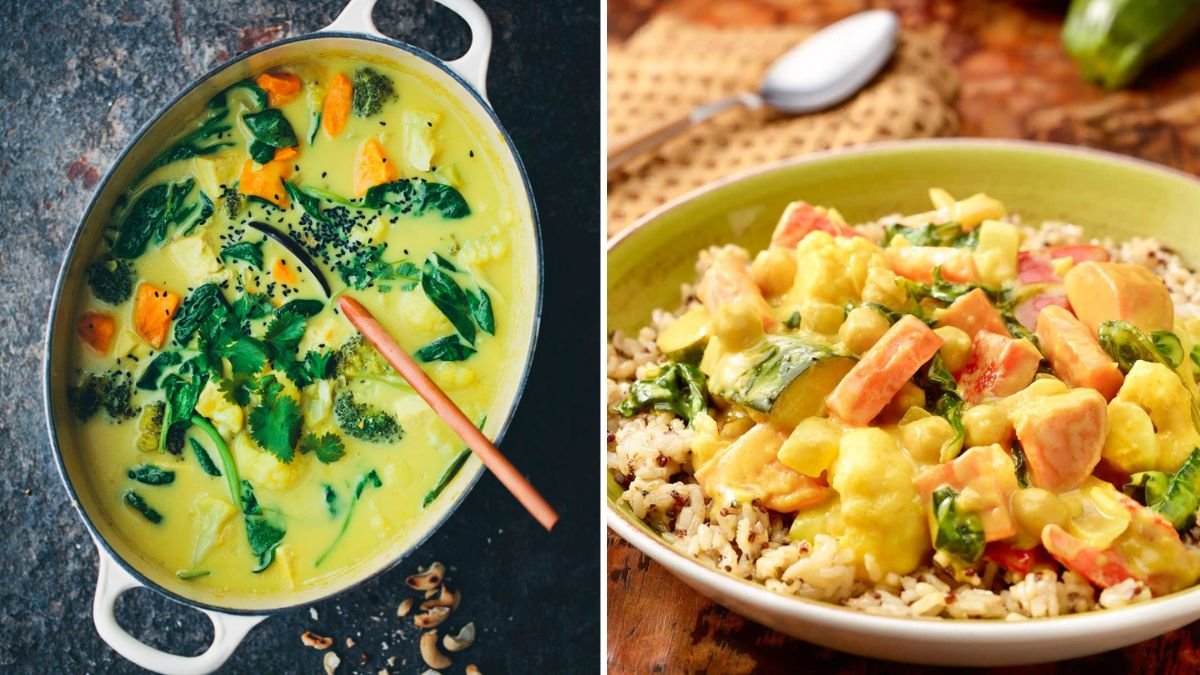
Craving a rich, flavorful, and creamy vegetable curry that tastes just like your favorite restaurant dish? You don’t need exotic ingredients or hours in the kitchen. With this 7-step guide to cooking vegetable curry in coconut milk, you can create a wholesome, comforting meal right in your American kitchen.
This curry is perfect for busy families, health-conscious individuals, or anyone who loves plant-based meals packed with flavor. Creamy coconut milk adds a luscious texture, while fresh vegetables bring vibrant color and nutrition. Let’s dive into the step-by-step guide to making this delicious coconut vegetable curry.
Step 1: Gather Fresh Ingredients
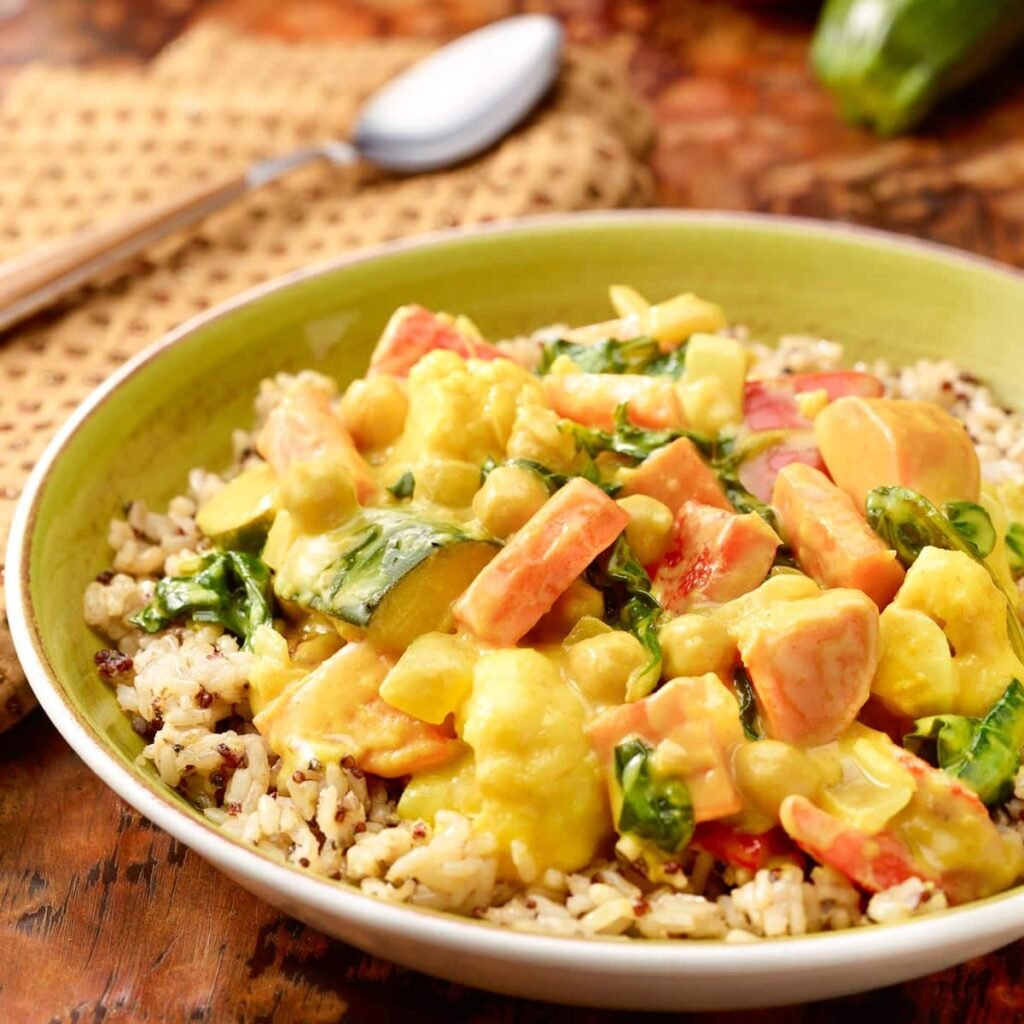
The first step to a great curry is using fresh ingredients. Here’s what you’ll need for a creamy vegetable curry serving 4:
Vegetables:

- 1 cup carrots, sliced
- 1 cup bell peppers, diced (red, yellow, or green)
- 1 cup green beans, chopped
- 1 cup cauliflower florets
- 1 cup peas (fresh or frozen)
- 1 medium potato, cubed
For the curry base:
- 1 tbsp coconut oil (or any neutral oil)
- 1 large onion, finely chopped
- 3 garlic cloves, minced
- 1-inch piece ginger, grated
- 1-2 green chilies, slit (optional)
- 1 can (14 oz) coconut milk
- 1 cup vegetable broth or water
- 2 medium tomatoes, chopped
Spices:
- 1 tsp cumin seeds
- 1 tsp turmeric powder
- 1 tsp coriander powder
- 1 tsp garam masala
- ½ tsp red chili powder (adjust to taste)
- Salt to taste
Optional garnishes:
- Fresh cilantro
- Lime wedges
- Toasted coconut flakes
Pro Tip: Choose seasonal, fresh vegetables for better flavor and nutrition. Frozen vegetables work well too if fresh isn’t available.

Step 2: Prep Your Vegetables
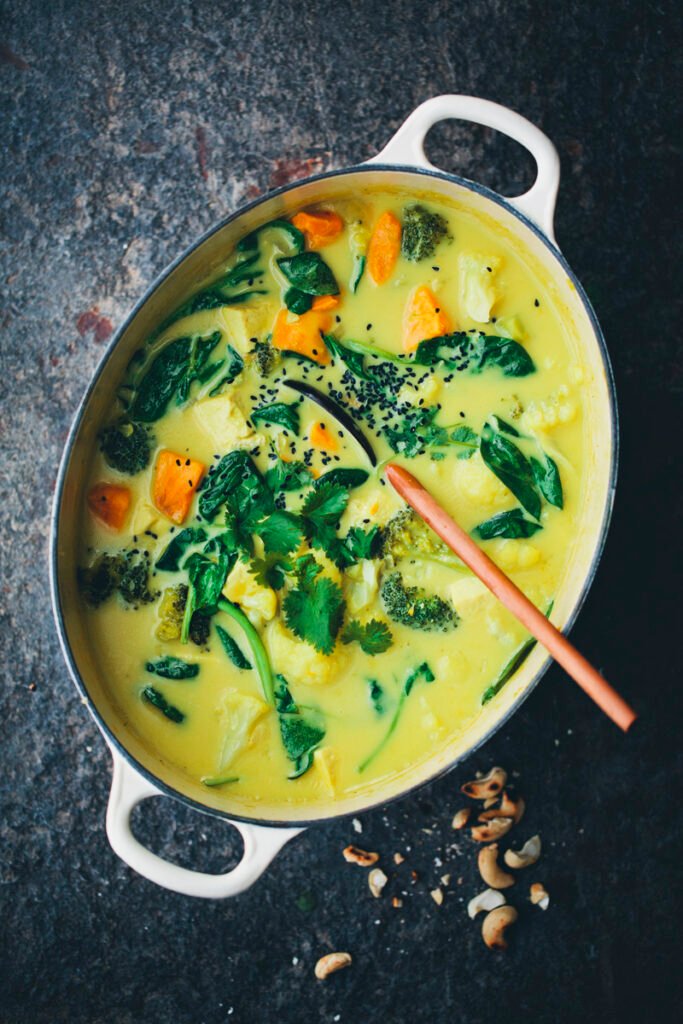
Before you start cooking, prep all the vegetables:
- Wash and chop the carrots, bell peppers, green beans, cauliflower, and potatoes into bite-sized pieces.
- Dice the onion, mince garlic, and grate ginger.
- Chop tomatoes and set aside.
Tip: Uniformly sized vegetables ensure even cooking and a better-looking curry.
Step 3: Sauté Aromatics
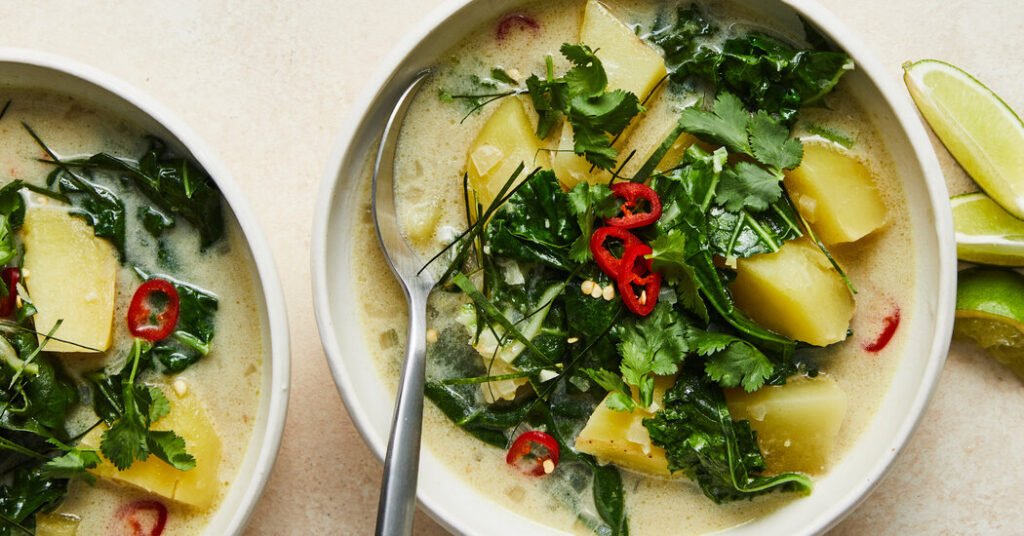
The key to a flavorful curry is sautéing aromatics.
- Heat 1 tbsp coconut oil in a large skillet or saucepan over medium heat.
- Add cumin seeds and let them sizzle for a few seconds.
- Add onions and sauté until golden brown.
- Add garlic, ginger, and green chilies; sauté for another 1-2 minutes until fragrant.
Tip: Don’t rush this step. Sautéing aromatics releases essential oils and creates a rich flavor base for your curry.

Step 4: Cook the Tomatoes and Spices
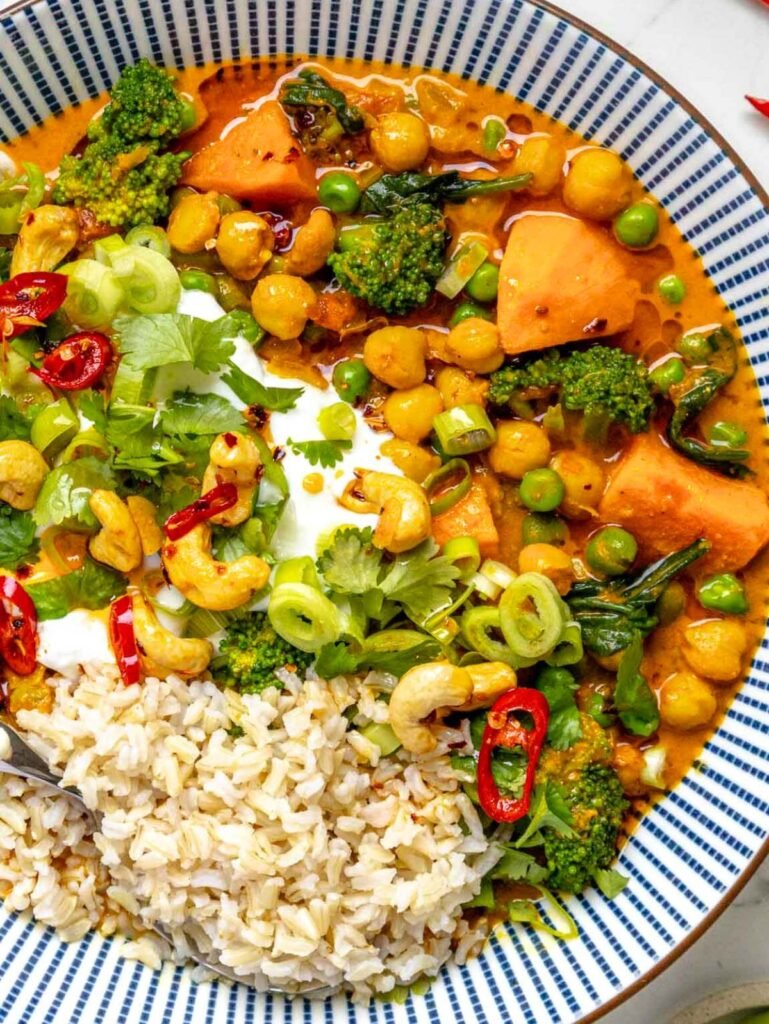
Now it’s time to build the curry’s flavor profile.
- Add chopped tomatoes to the skillet and cook until soft.
- Add turmeric, coriander, red chili powder, and salt. Stir well.
- Cook for 2-3 minutes until the spices are fragrant and the tomatoes break down into a thick paste.
Tip: For a smoother curry, you can blend the tomato-spice mixture before adding vegetables.
Step 5: Add Vegetables and Simmer
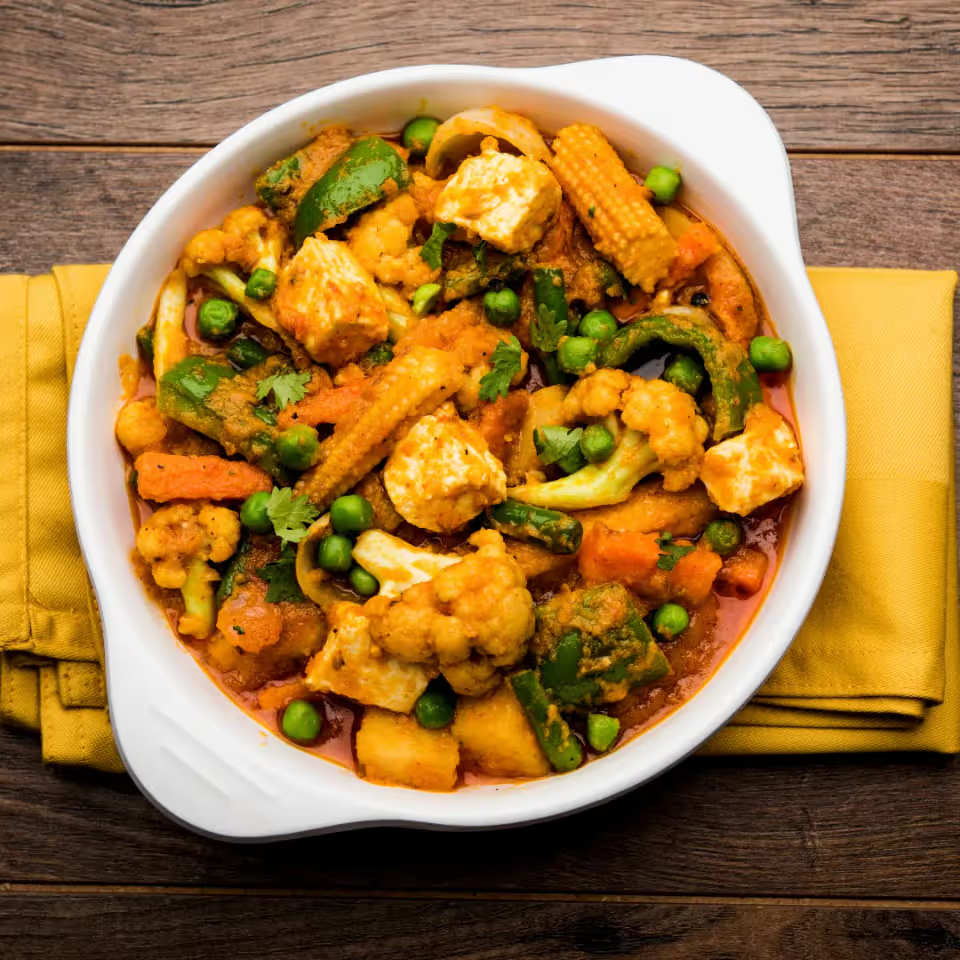
Once your base is ready, it’s time to cook the vegetables:
- Add chopped vegetables (except peas) to the skillet.
- Stir to coat the vegetables in the spice mixture.
- Pour in 1 cup of vegetable broth or water.
- Cover and simmer on low-medium heat for 10-12 minutes until the vegetables are tender.
Pro Tip: Avoid overcooking the vegetables; you want them soft yet slightly crisp for texture.

Step 6: Add Coconut Milk for Creaminess
Coconut milk transforms this dish into a creamy, luscious curry:
- Stir in the can of coconut milk and peas.
- Simmer gently for 5-7 minutes, allowing the flavors to meld.
- Add garam masala and adjust salt to taste.
- If the curry is too thick, add a little water or vegetable broth to reach your desired consistency.
Tip: Use full-fat coconut milk for the creamiest texture, or light coconut milk for a lower-calorie version.
Step 7: Garnish and Serve
Your curry is almost ready! Finish it with fresh garnishes:
- Sprinkle chopped cilantro over the curry.
- Add a squeeze of lime juice for a hint of tanginess.
- Serve hot with steamed rice, naan, or roti.
- Optional: Top with toasted coconut flakes for added texture and flavor.
Pro Tip: Curry tastes even better the next day, making it perfect for meal prep or leftovers.

Extra Tips for a Perfect Coconut Vegetable Curry
- Adjust spice levels: Modify red chili and green chilies according to your taste.
- Add protein: Include tofu, chickpeas, or paneer for a protein boost.
- Make it creamy without coconut milk: Use cashew paste or yogurt for a different creamy texture.
- Use a heavy-bottomed pan: Prevents burning and ensures even cooking.
Why This Vegetable Curry Is a Must-Try
- Healthy & nutritious: Packed with fresh vegetables and coconut milk, this curry is rich in fiber, vitamins, and minerals.
- Vegan-friendly: Perfect for plant-based diets and dairy-free households.
- Quick & easy: Ready in just 30-40 minutes, making it ideal for busy American families.
- Versatile: Works as a main dish with rice or as a side with roti, naan, or quinoa.
Conclusion
Cooking vegetable curry in coconut milk at home doesn’t have to be complicated. With this 7-step guide, you can enjoy a restaurant-quality, creamy, and flavorful curry in the comfort of your kitchen. From prepping fresh vegetables to simmering them in a fragrant coconut milk sauce, this recipe is both delicious and nutritious.
Whether you’re serving it for lunch, dinner, or a special occasion, this coconut vegetable curry is sure to become a family favorite. So gather your ingredients, follow the steps, and savor the rich, comforting flavors of homemade coconut curry today!.